
Italy-Morocco Dialogue: Experts in Verona Highlight Autonomy and Regional Governance as Keys to Stability

Verona, May 25 (TNA) A high-level panel of Italian and Moroccan experts convened in Verona on Saturday to examine the evolution of regional governance, positioning Morocco’s Autonomy Plan for the Sahara as a vital mechanism for Mediterranean stability and economic development.
The symposium, titled "Autonomy and Regionalized Governance: Comparative Perspectives on the Italian Experience and the Moroccan Horizon," brought together international relations scholars, policymakers, and regional officials. Amid growing security pressures across the Sahelo-Saharan zone, participants underscored the importance of decentralized governance models in fostering long-term regional security.
Speakers at the event frequently drew parallels between successful European frameworks and Morocco's proposed initiative, framing local autonomy under national sovereignty as the most realistic path forward for the region.
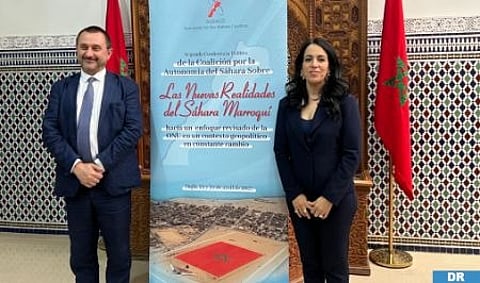
Luigi Spagnolli, an Italian Senator representing the Trentino-Alto Adige region-itself a prominent model of European devolution-noted that international frameworks, including the UN Security Council’s Resolution 2797 adopted last October, increasingly recognise the credibility of the Moroccan autonomy initiative. Senator Spagnolli also highlighted the pluralistic nature of Moroccan identity as enshrined in its constitution, pointing out that national unity in the Kingdom is structurally reinforced by a diverse heritage spanning Arab-Islamic, Amazigh, Sahrawi-Hassani, African, and Mediterranean influences.
The symposium concluded with an open floor discussion among Italian regional officials, academics, and members of the Euro-Moroccan community, focusing on how future cross-Mediterranean institutional partnerships can continue to support and refine regional governance models.
Expanding on the institutional design of these frameworks, political scientist and international relations analyst Marco Baratto emphasized that the autonomy plan creates a sustainable political outlook by linking localized governance directly to economic empowerment. Baratto drew a historical comparison to Italy's domestic governance, stating that Sicily’s Special Statute of 1946 and Morocco’s Autonomy Plan serve as two distinct models demonstrating how regional empowerment can actively strengthen national unity rather than fracture it.
The structural mechanics of the plan were further analyzed by Dr. Yasmine El Hassnaoui, a professor of international relations and conflict resolution specialist. Dr. El Hassnaoui explained that the autonomy framework successfully bridges the gap between state sovereignty and regional self-governance. She pointed to the substantial infrastructure, renewable energy, and logistics investments currently transforming the southern provinces into a cross-border economic hub as evidence of the plan's tangible impact on the ground.
The broader diplomatic context was introduced during the opening session by regional analyst Abdelilah Nejjari, who provided a detailed briefing on the evolving international consensus. Nejjari argued that UN Security Council Resolution 2797 has established a definitive benchmark for international legality, signaling a clear shift toward realistic, compromise-based political solutions rooted in regional autonomy under Moroccan sovereignty.