
Frequent nighttime urination is called nocturia, and it can happen for several different reasons. While an occasional trip to the bathroom at night may be normal, repeatedly waking up to urinate can sometimes point toward a bladder, prostate, metabolic, or sleep-related issue.
How Many Times Is Too Many?
There is no single number that defines abnormal nighttime urination for everyone. Age, fluid intake, medications and overall health all matter. However, if you regularly wake up two or more times a night and it is disturbing your sleep, it is worth paying attention to the pattern.
The important question is not simply “How much water did I drink?” but “Why is my body producing or asking for urine during the night?”
It Could Be Your Prostate, Not Your Water Intake
For men, one commonly overlooked cause is benign prostatic hyperplasia (BPH), or an enlarged prostate.
As the prostate enlarges, it can obstruct urine flow and prevent the bladder from emptying efficiently. The bladder may then signal the need to urinate more frequently. Nighttime urination may occur along with symptoms such as a weak urine stream, difficulty starting urination, urgency, dribbling or a feeling that the bladder has not emptied.
This is one reason a consultation with an experienced urologist can be more useful than simply restricting fluids.
What Else Can Cause Nighttime Urination?
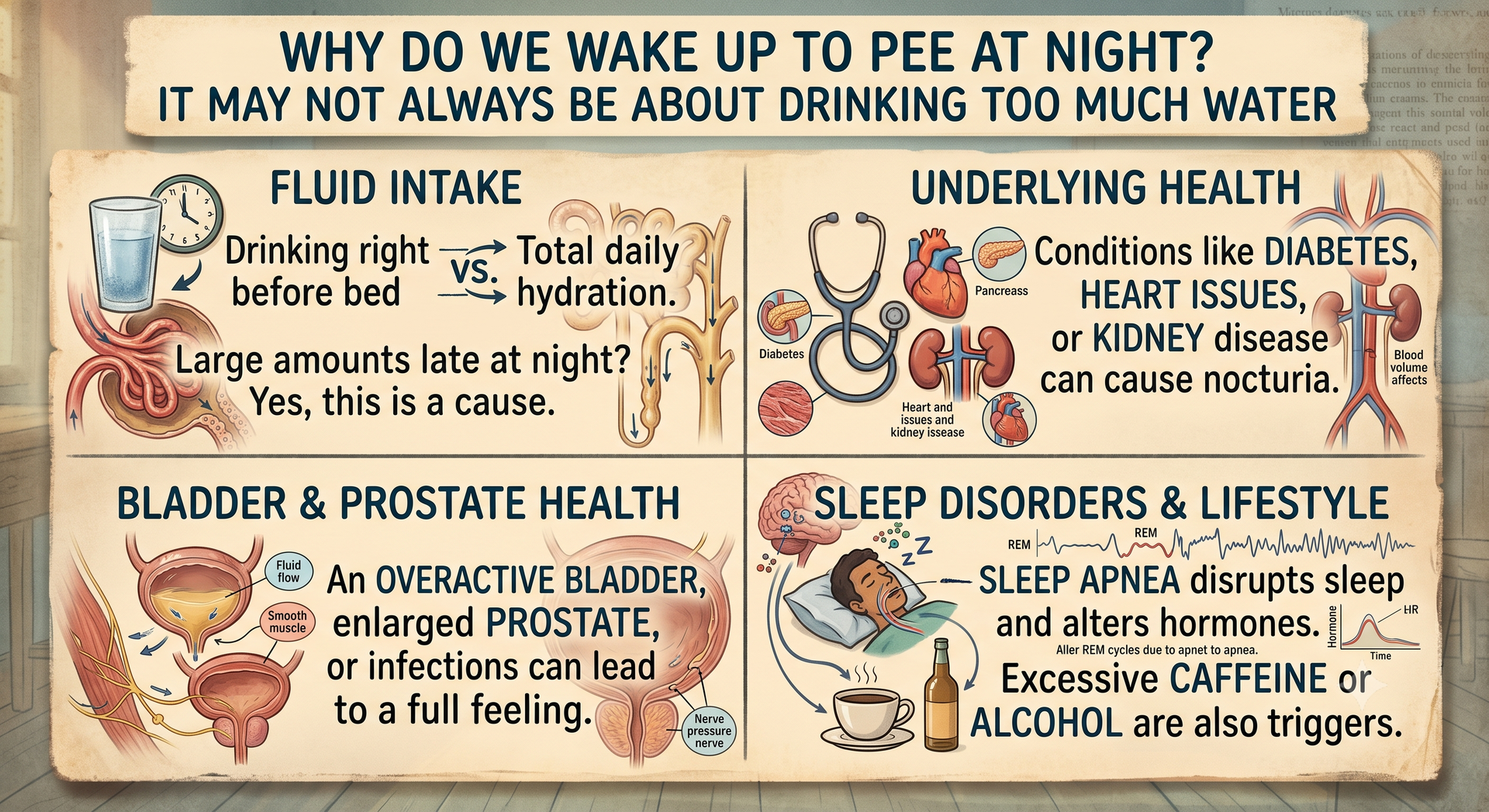
Several conditions can contribute to nocturia:
Overactive bladder: A sudden, difficult-to-control urge to urinate can wake you during the night.
Urinary tract infection: Burning, urgency, cloudy urine, or pelvic discomfort may accompany increased frequency.
Diabetes: High blood glucose can increase urine production and may be associated with increased thirst.
Excess urine production at night: Some people naturally produce a larger proportion of their daily urine during nighttime.
Leg swelling: Fluid that accumulates in the legs during the day can return to circulation when lying down, increasing urine production.
Caffeine and alcohol: Both can worsen nighttime urinary symptoms in some people.
Sleep problems: Sometimes a person wakes because of poor sleep and then urinates simply because they are already awake.
 Should You Stop Drinking Water Before Bed?
Not necessarily.
Reducing large amounts of fluid immediately before sleeping may help, but severely restricting fluids can create other problems. Instead, pay attention to timing and quantity. Limiting evening caffeine and alcohol may also help.
If you take medicines that increase urination, such as certain diuretics, don't change the dose or timing without speaking to your doctor.
When Should You See a Urologist?
Don't ignore persistent nocturia when it is accompanied by blood in the urine, painful urination, a weak stream, difficulty emptying the bladder, excessive thirst, fever, pelvic pain or a significant change in urinary habits.
A urologist in Lucknow or another qualified urology specialist can evaluate whether the problem is related to the prostate, bladder, kidneys, infection or another underlying condition. Depending on your symptoms, evaluation may include urine testing, blood tests, ultrasound, prostate assessment or a bladder diary.
The key takeaway is simple: waking up to pee isn't always a sign that you drank too much water. If it happens repeatedly, understanding the underlying cause is more useful than simply cutting back on fluids.
The author is a urologist and kidney transplant specialist with more than 20 years of experience, and he treats a broad range of urinary and prostate conditions. His clinical expertise also includes andrology, male infertility and men's urinary and sexual health.