
Madrid, September 3 (TNA) Spain has found no evidence to conclude that July’s deadly mass crossing from Morocco into its North African enclave of Ceuta was orchestrated or carried out by Moroccan authorities, Prime Minister Pedro Sanchez told lawmakers on Thursday, seeking to defuse a political storm over the incident that left more than 80 people dead.
Sanchez’s remarks in the lower house of parliament came after a leaked police report this week described the surge as a “planned and phased operation” designed to overwhelm border controls, with some versions alleging Moroccan security forces actively guided migrants toward crossing points. The prime minister rejected those claims, saying no Spanish or foreign institution had provided “solid evidence” of Moroccan state involvement.
“No institution has provided solid evidence”
“I can assure you that no institution – not the diplomatic service, nor the European Commission, nor any international body – has provided the Spanish government with any solid evidence that Morocco planned or carried out the incident. None whatsoever,” Sanchez said, according to multiple reports of his parliamentary statement.
He acknowledged, however, that Moroccan Gendarmerie forces allowed crossings to continue during a critical 10-hour period on July 30, when arrivals peaked, but said it remained unclear whether this reflected deliberate inaction or an inability to control the situation.
Deadly rush in July
Tens of thousands of people crossed into Ceuta from Morocco on July 30–31 in one of the largest single border surges into Spanish territory in years. Spanish authorities have said more than 80 people died in connection with the incident, including in stampedes and while attempting to swim or climb border barriers, though final figures are still being verified.
The episode triggered a humanitarian and political crisis in the tiny enclave, overwhelmed local services and reignited debate across Europe about migration, border security and Spain’s reliance on cooperation with Rabat.
Leaked report fuels controversy
Controversy intensified after media outlets reported details of an internal document from Spain’s National Centre for Immigration and Borders (CENIF) that described the Ceuta influx as a coordinated operation with “prior planning” and alleged that Moroccan security forces “actively guided” migrants toward crossing points. Some versions of the report suggested the operation had “objectives other than migratory” and was aimed at collapsing Spain’s border management system.
But Spain’s interior ministry and national police leadership have since distanced the government from those conclusions. Interior Minister Fernando Grande-Marlaska said there is no police report that “attributes” the planning or execution of the mass entry to Moroccan security forces, and police chief Francisco Pardo told the minister there is no such document blaming Rabat, according to Spanish media.
Sanchez blames disinformation, defends cooperation with Rabat
In earlier remarks this week, Sanchez accused Russia, Israel and far-right networks of spreading disinformation about Spain’s migration policy to inflame the Ceuta crisis, while insisting that cooperation with Morocco remains “frankly positive.” He has repeatedly said no intelligence service cooperating with Madrid has presented evidence that Moroccan authorities were behind the surge.
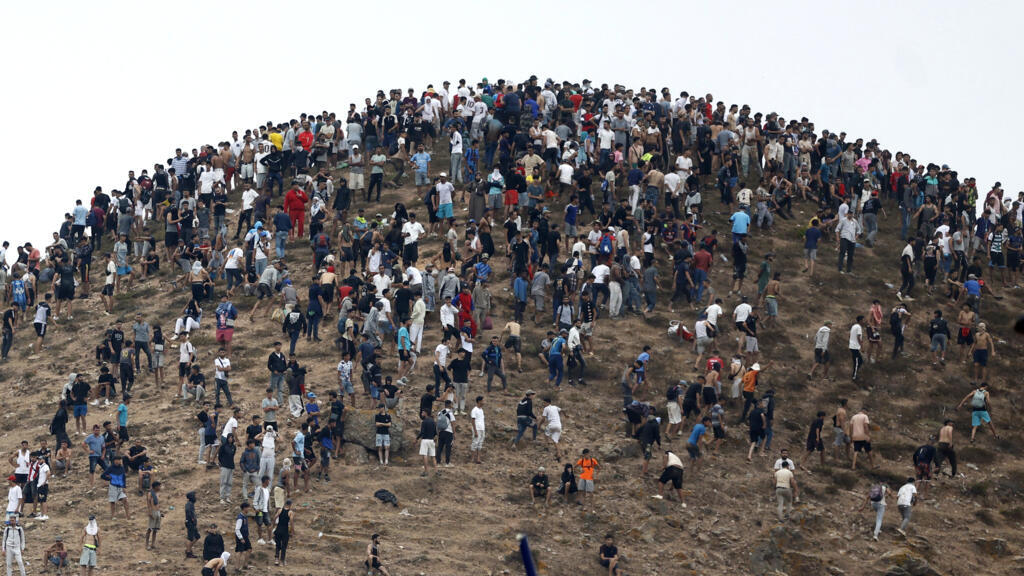
Moroccan authorities have denied deliberately facilitating the mass movement into Ceuta, attributing it instead to trafficking networks, social media rumours and a misreading of a recent Spanish Supreme Court ruling on migration-related issues.
Political fallout in Spain
Opposition parties in Spain and some European lawmakers have used the incident to criticise Sanchez’s handling of migration and border security, accusing him of being soft on Rabat and failing to protect Ceuta. Conservative and far-right members of the European Parliament have rallied against his government over the crisis, citing the leaked report as evidence of a coordinated breach.
By telling parliament there is no proof of Moroccan orchestration, Sanchez is attempting to stabilise relations with Rabat, reassure EU partners and blunt domestic criticism, even as investigations into the exact sequence of events and responsibility for the deaths continue.